The Pigeon Guys
On Brooklyn’s rooftops, pigeon-keeping was a way of life. Then the borough changed.
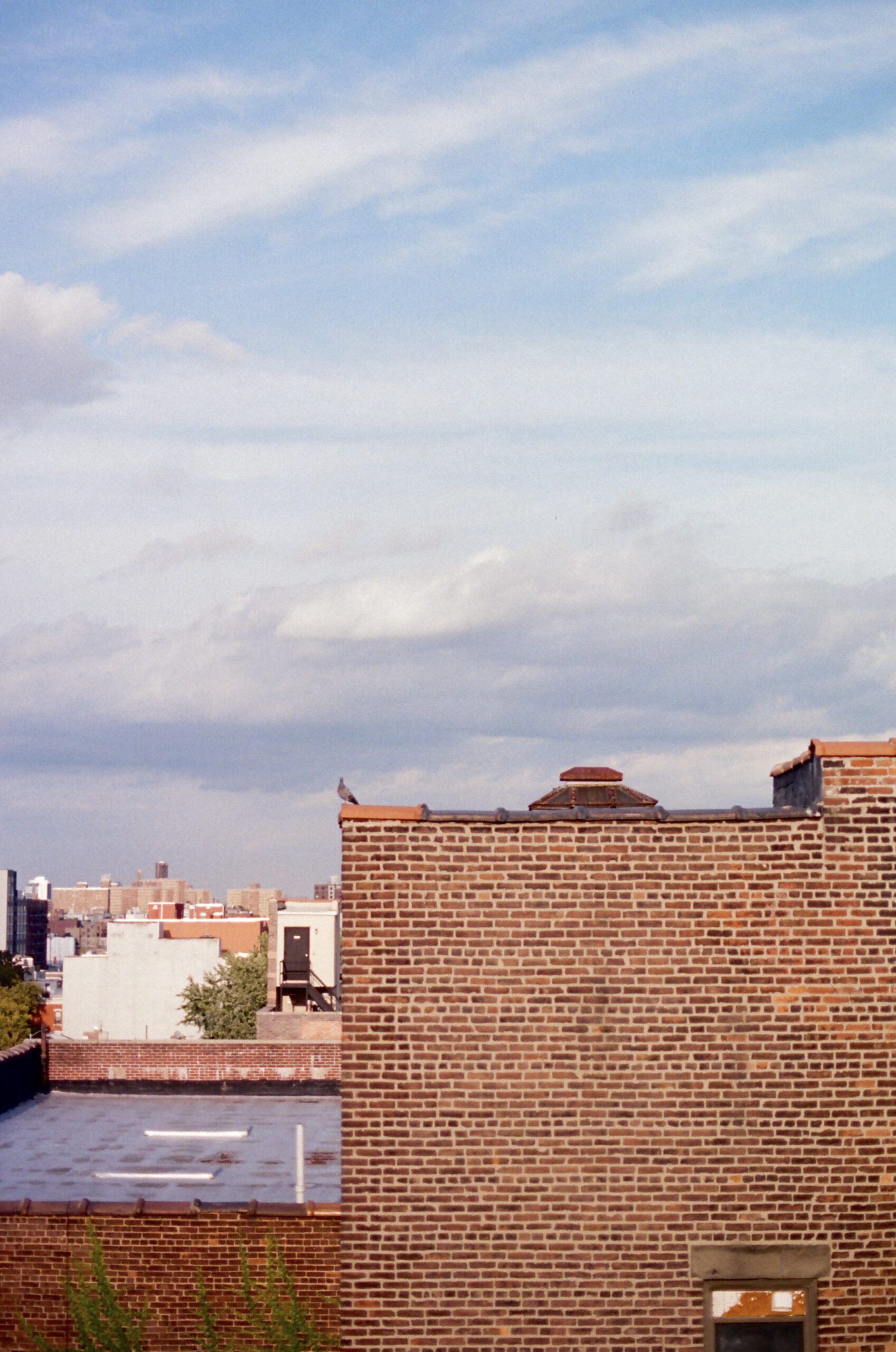
In the summer of 1950, like most summers before and after, Ciro and his friends spent their days on the roof watching Johnny Pigeon fly his birds. As other kids played in the streets below, Johnny would release dozens of pigeons, setting them twirling, rolling, flitting, and diving until they filled the sky over Bed-Stuy like stars. Then, as if by magic, they came back.
Now in his eighties, Ciro Scala still remembers the spectacle of Johnny’s pigeons. Each afternoon they staged a circus, and different breeds played different roles. Tipplers circled the city for hours without landing. Highflyers soared thousands of feet until they disappeared from view. Rollers tumbled and somersaulted into the open blue sky like synchronized divers. The homing pigeons always found their way home, even when released from great distances.
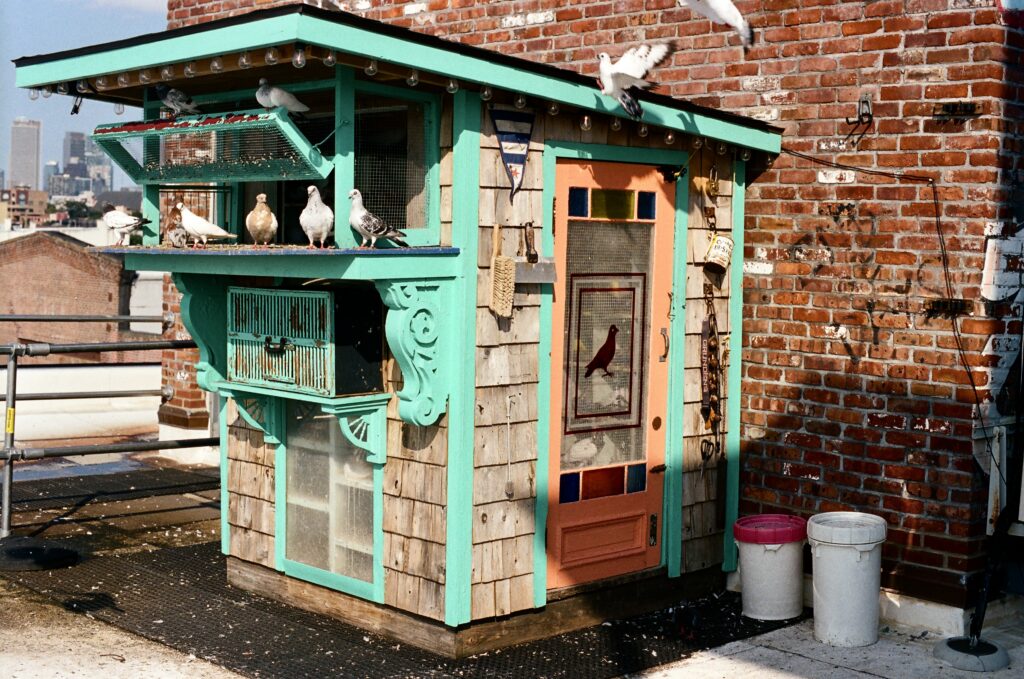
Brooklyn in the 1950s was full of pigeon keepers like Johnny, known formally as “fanciers” or familiarly as “bird guys,” who bred, raised, and trained pedigreed birds in coops they built on their roofs. Every day, keepers across the borough released their charges. The birds were free to hop between buildings, fly with other flocks, or socialize with the street pigeons below. Fliers often played a game to “steal” each other’s birds. They’d release their flocks at the same time and let the birds mix as the men competed to see who could end up with the most birds on his roof.
Johnny Pigeon was Ciro’s second cousin and one of many young Italian-American men in the neighborhood who kept pigeons. Johnny was a generation older and had little interest in hanging out with his cousin. But he’d talk to anyone about pigeons. As Ciro remembers, “He was a pigeon. You could ask him anything. He knew it all.”
Johnny’s coop was the envy of the neighborhood—a “luxury hotel” for pigeons, Ciro says. Every day, Johnny spent hours feeding the birds, cleaning the coop, administering medicine, and, of course, flying them to ensure they got their exercise. When his homing pigeons were ready, Johnny entered them in races, in which hundreds of birds were released from one “liberation” point and timed to see which returned to its coop the fastest. How the birds navigated back to Bed-Stuy, whether released from Bay Ridge or Ohio, was a mystery, the way home charted by some invisible force.
Men like Johnny Pigeon taught Ciro and his friends the secrets of pigeon care, passing knowledge from neighbor to neighbor, generation to generation. When he was 12, Ciro decided to buy two pigeons of his own from one of the many dedicated pet stores scattered across the city. He built a makeshift coop from wooden dowels and chicken wire, but he couldn’t get his birds to come home. “I guess they didn’t like my hospitality,” he jokes. Eventually, Ciro gave up and sent his remaining pigeons to live at Johnny’s hotel.
The rooftop offered an escape from the cold-water railroad flat that Ciro shared with his parents and four siblings. It was a secluded spot where he and his friends could have a Coke and sneak cigarettes away from the prying eyes of the neighborhood adults. While the boys hung out, enjoying the long, hot days of summer, the pigeons flew free, hopping on Ciro’s knee and shoulder.
As one summer gave way to the next, Ciro’s corner of Bed-Stuy began to change. The factories that produced shoe polish, grommets, and chocolate moved out to the suburbs, and with them many of the working-class Italian-American families of the neighborhood. They were supplanted by a wave of Puerto Rican migrants looking for work, a growing Black population, and members of the Hasidic Jewish community expanding out of South Williamsburg. The pigeons that remained were unaware of the neighborhood borders marked by Flushing and Classon Avenues and flew over the homes of young Black and Latino men, who grew curious about the flocks of birds overhead. The keepers passed along their knowledge to the new neighbors. Over time, the practice evolved out of the enclaves of European immigrants into a shared pastime for Brooklyn’s working-class men.
Soon developers moved in, converting the vacant factory buildings into studio lofts for artists escaping the rising rents in Manhattan. Other factories became mini-malls, galleries, and nightclubs. The industrial landscape that had long shaped the life of the blue-collar worker transformed into the aspirational aesthetic of the artist, drawing white professionals seeking a new kind of cultural cachet.
In the 1950s, landlords often knew pigeon keepers directly; some were even pigeon keepers themselves. But as residential spaces grew more corporatized and buildings more regulated, the relationships between landlords and tenants broke down. Rooftop spaces became a luxury amenity, and the newer residents no longer wanted pigeon coops taking up their roof real estate. Pigeon keepers began housing their birds wherever they could, sometimes paying rent just to keep coops on open roofs in distant neighborhoods.
In the 1970s, Ciro moved to Brooklyn Heights with his wife, Pat. Together, they built and ran a successful textile company. After selling the company in 2016, Ciro pursued his lifelong dream of finishing his education and now teaches history at a high school not far from where he and Pat raised their daughter. On summer days, he walks through the quiet streets of Brooklyn Heights, greeting neighbors who rarely greet him back.
After the pandemic, Ciro returned to Park Avenue and Skillman Street to show his grandchildren where he grew up. He heard the echo of his friends playing kickball on the streets, but the neighborhood he remembered was gone. The restaurant his parents owned had been torn down and replaced with an apartment building. The shoe polish and chocolate factories were now high-rise condos. Only the foundation of the Italian community remained: St. Lucy’s–St. Patrick’s Roman Catholic Church, where Ciro had once been an altar boy. A couple of years later, in 2024, the church buildings were demolished and the lots leveled for luxury townhomes. The homing pigeons no longer return to the rooftops of Bed-Stuy.
The industrial landscape that had long shaped the lived reality of the blue-collar worker transformed into the aspirational aesthetic of the artist, drawing white professionals seeking a new kind of cultural cachet.
Duke Riley’s first pigeon came to him as a young boy in the early 1980s, an injured street pigeon that he nursed back to health. When he released it back into the world, the bird kept returning. He became fascinated by an animal that chose domestic life, even when given the option to live wild.
While a student at the Rhode Island School of Design, Duke moved into the attic of an older home that he shared with a flock of street pigeons, letting them fly in and out as they pleased. When Duke moved to Brooklyn in the 1990s to become an artist, he sought out the few bird guys who still found ways to keep pigeons despite the scarcity of space and built up his own flock. Across three decades in New York, Duke has moved his pigeons nearly a dozen times. He’s been kicked off rooftops because of stricter building codes, changes in architecture, and new neighbors. Still, he considers it a successful track record.
Over that time, pigeons became central to his art. In 2016, for his performance piece Fly By Night, Duke moved two thousand birds onto a decommissioned Navy ship that he’d converted into pigeon coops, his personal flock among them. The birds wore tiny LED bands around their ankles and were trained to fly in unison. For six weeks, audiences gathered at the Brooklyn Navy Yard to watch the pinpoints of light dart across the night sky.
Today, Duke keeps his birds on the roof of Pioneer Works, an art nonprofit on the Red Hook waterfront, as part of a living installation celebrating the history of the borough. It is one of the last places in the city where visitors can observe the tradition honed by Johnny Pigeon and the neighborhood fliers. Eighty birds call this roof home, spending their days flying between the shade of the coop and the open expanse beyond the rooftop’s edge, where dozens of boats float across New York Harbor. With a fully furnished rooftop penthouse and amenities including food, medicine, and a view of the Statue of Liberty, Duke’s pigeons might have the best rent deal in Brooklyn.
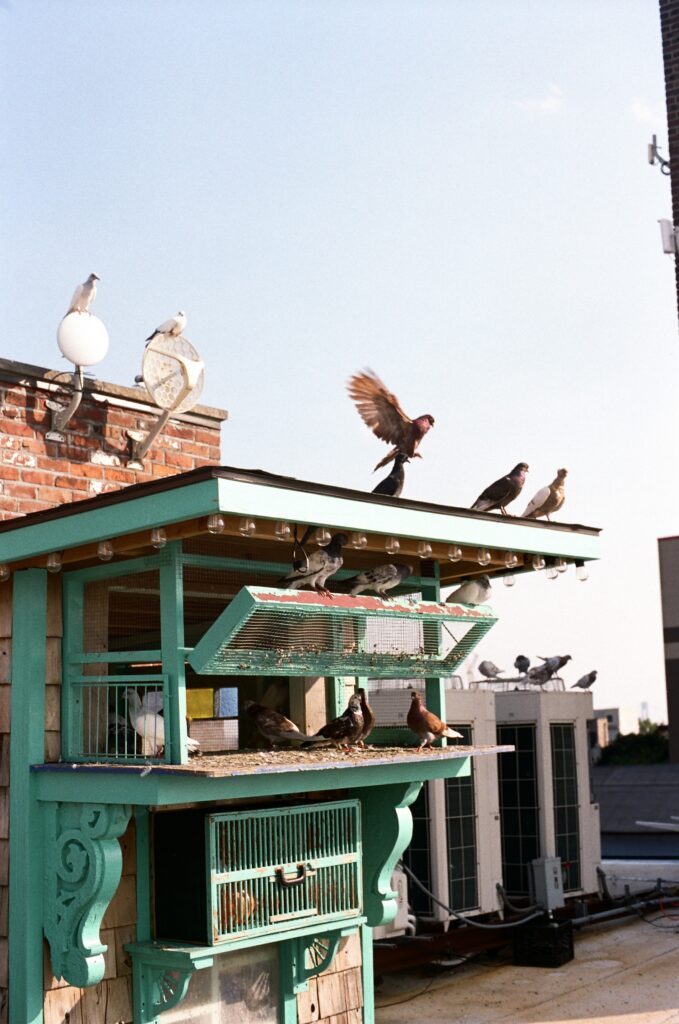
With the design touch of a sailor, Duke assembled a shanty-style coop out of natural wood shingles, trimmed in bright teal and decorated with vintage buoys. The architecture of pigeon coops has developed over “thousands of years of people making small architectural decisions, all based on the comfort and safety of pigeons,” Duke says. The ceiling must be raised to a certain height, the openings widened to prevent a wing or a leg from catching. Still, he is constantly tweaking the details, exploring ways to push the design beyond function into artistry. After selling one of the coops from Fly By Night to Martha Stewart, an avid pigeon keeper, Duke jokes that, when it comes to interior design, he often asks himself, “What would Martha do?”
Duke shares the daily labor of pigeon keeping with his studio team and two Pioneer Works staff members. He describes his relationship to the birds as one of reciprocity, not ownership: he offers them food and shelter, and they offer him a daily communion with nature.
In 2021, when a snowy owl was spotted in Central Park, news outlets called it the first sighting in the park in over a hundred years. But to Duke, it was nothing out of the ordinary: “Sometimes you go up to check [on your pigeons] at five in the morning, and you’ll see a snowy owl,” he says. In caring for their flocks, fliers spend hundreds, if not thousands, of hours in the space between the city and the sky. Up there, they are bound to notice things the rest of us are missing.
Pioneer Works plans to build a public observatory on its rooftop, in the same spot currently occupied by Duke Riley’s pigeons. The multimillion-dollar project is nowhere near complete, but when the time comes, Pioneer Works will trade one view of the sky for another, and Duke will once again have to find his birds a new home. In a constantly changing borough, relocation is part of the deal.
As fledglings, homing pigeons build an internal atlas of the place where they are raised. While other breeds can acclimate to new rooftops given time, homing pigeons are difficult to relocate once they’ve reached adulthood. Their instinct for home is deeply ingrained, guided by a mixture of smell, sight, sound, and magnetic forces. They are able to follow that instinct across vast distances, but when they get close, homing pigeons rely heavily on visual landmarks to find the precise location of their coop. Johnny’s pigeons are long gone, but if they returned to Bed-Stuy today, they would not know where to go. The landmarks have disappeared. Shoe polish factories have given way to high-rise condos, restaurants to apartment buildings. They might circle the unfamiliar rooftops forever, searching for a place they can no longer recognize.